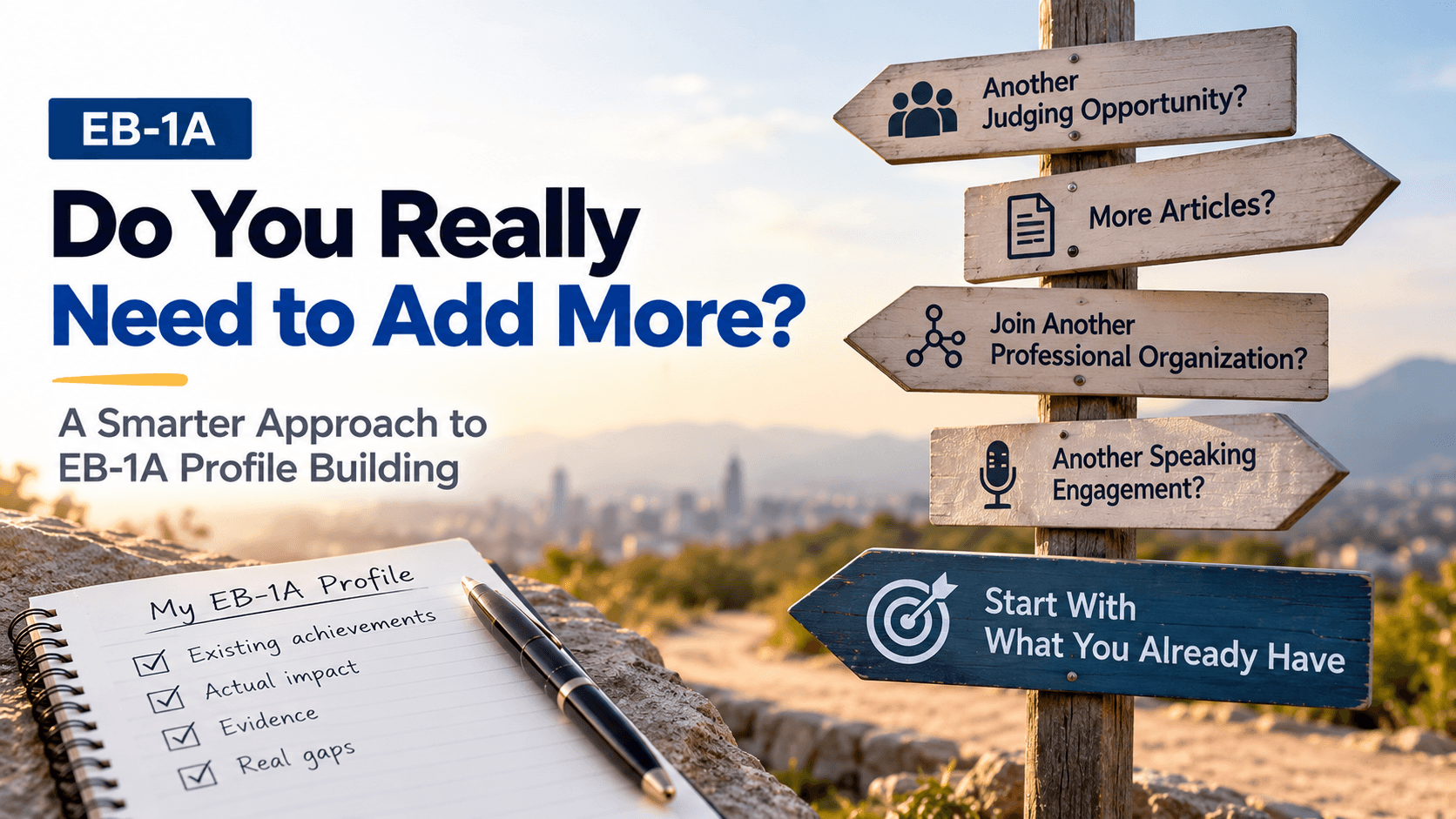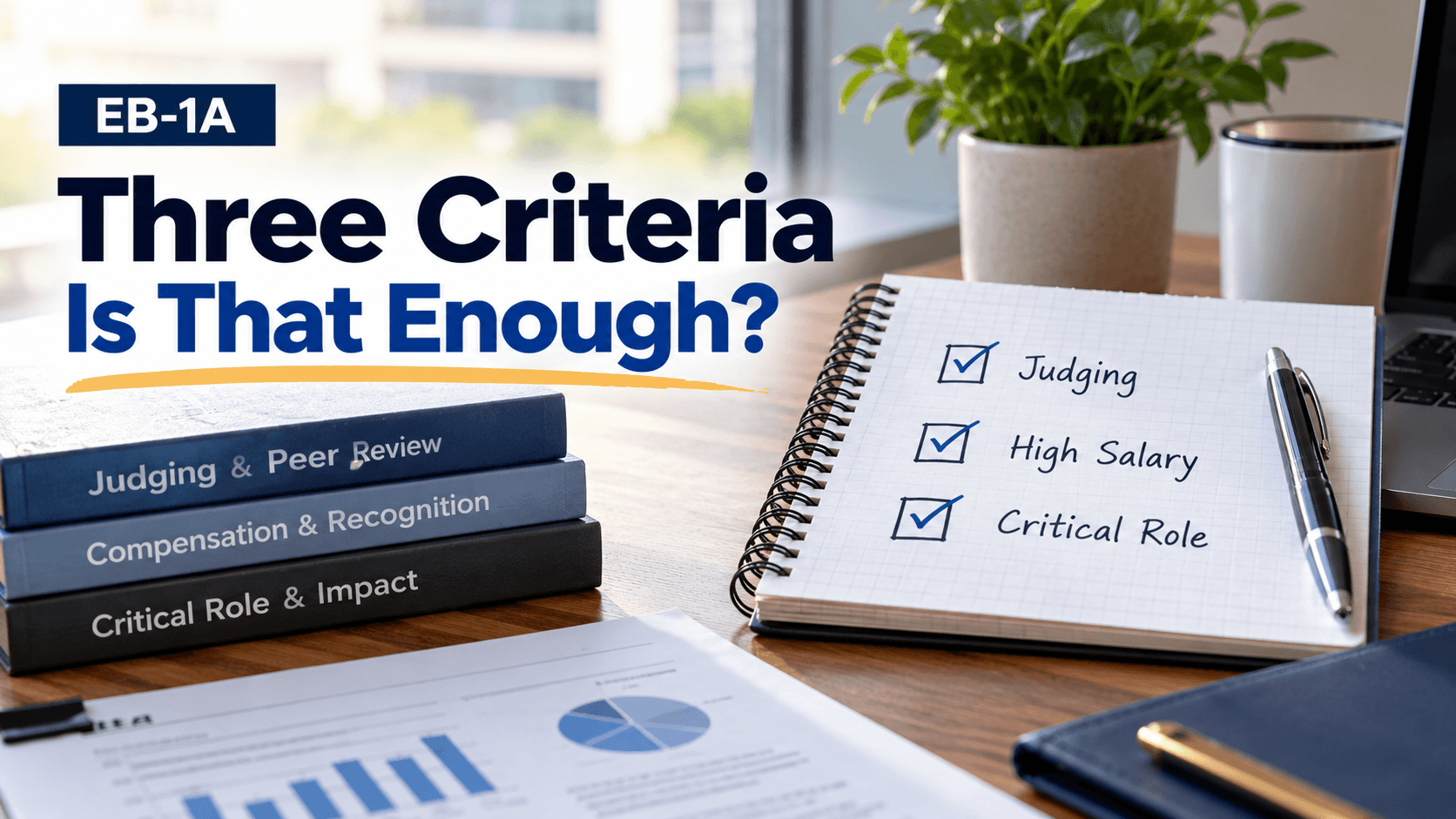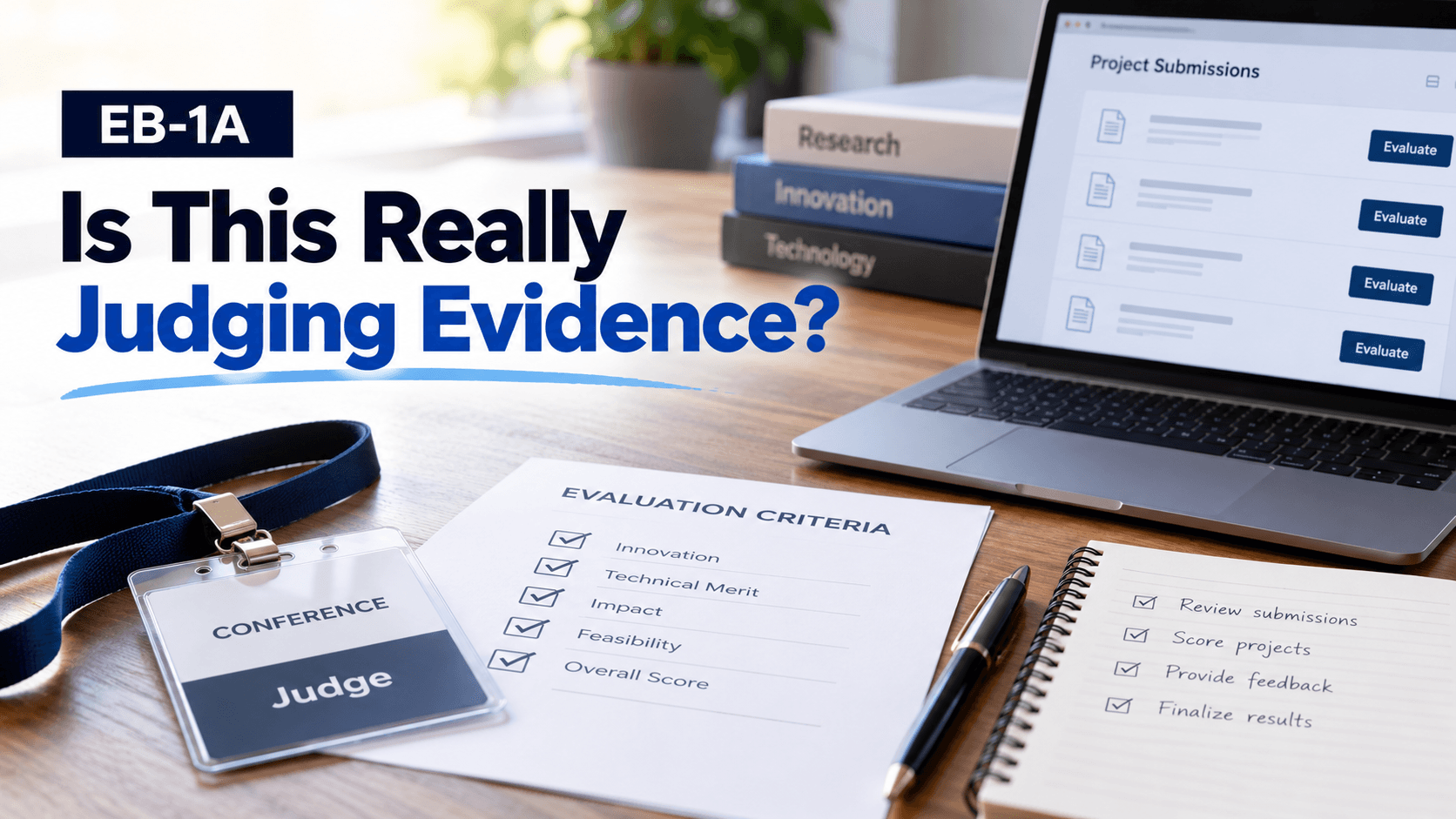
You were invited to a hackathon. You joined a conference committee. You reviewed someone's work. You received a judging certificate.
Does that automatically mean you have strong judging evidence for an EB-1A profile? Not necessarily.
One of the biggest mistakes people make is focusing on the name of the opportunity rather than what they actually did.
What Did You Actually Evaluate?
Imagine someone was invited to a hackathon as an industry expert. That sounds promising, but what happened once they got there? Did they evaluate submissions and score projects against defined criteria? Or were they mainly mentoring participants, speaking on a panel or attending the event?
All of those can be worthwhile professional activities, but they aren't necessarily the same thing.
When thinking about judging, the actual activity matters. You should be able to clearly understand what work you evaluated, what your role involved and how the opportunity related to your professional expertise.
Why Were You Selected?
Another question people sometimes overlook is why the organization selected them in the first place. Was their professional expertise relevant? Did organizers review their background? Were judges expected to meet certain qualifications? Were they invited because of their experience in the field?
A certificate issued at the end of an event may not explain any of this. That's why the surrounding context can be just as important as the certificate itself.
Don't Keep Only the Certificate
People often complete a judging opportunity, download the certificate and move on. Months later, the judging portal is closed, the invitation email is difficult to find and they can barely remember how the evaluation worked.
If you're participating in judging or peer review, it's worth documenting the experience while you're doing it. The goal isn't to collect a folder full of certificates. It's to be able to understand and explain what you actually did.
Quality matters here too. Applying to every opportunity available simply to increase your judging count may not create a stronger professional story. A better question is whether the opportunity genuinely makes sense for your expertise and whether you are performing substantive evaluation of other people's work.
At NicheProfile, we prefer to look at how judging fits into the person's broader professional profile rather than treating it as an isolated box to check.
Building Your EB-1A Profile?
NicheProfile helps professionals understand how activities such as judging fit into their larger profile, organize supporting information and identify areas that may need further development.